

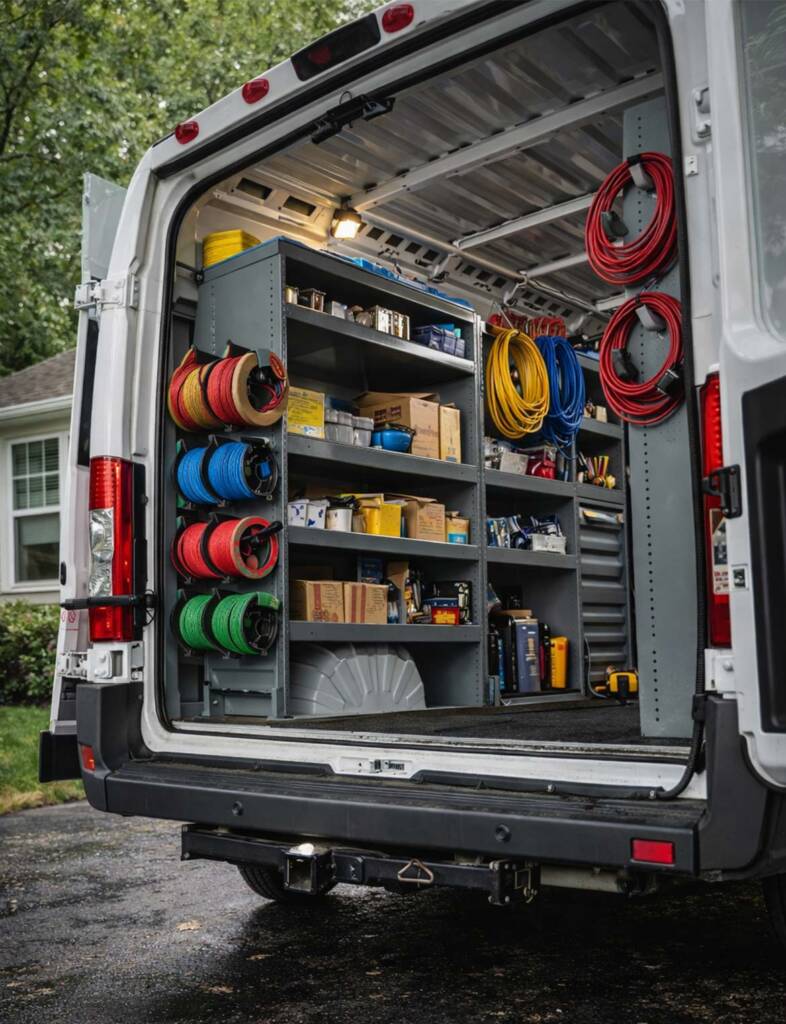
Service vehicles are the backbone of a successful electrical business. Each service call, project installation, and urgent repair requires technicians to arrive on site with the right tools, equipment, and materials. When vehicles are unavailable or improperly configured, productivity drops, schedules slip, and customer trust erodes.
Electrical work demands precision, safety, and speed. That combination puts significant pressure on service vehicles, which must carry specialized equipment, support job-site safety requirements, and remain dependable under heavy daily use. As electrical businesses grow, fleet management services become a critical factor in supporting vehicle availability, controlling costs, and supporting expansion.
This guide explains how electrical contractors can improve fleet performance, reduce downtime, and build a scalable fleet strategy that supports long-term growth.
Why Electrical Contractors Depend on a Reliable Fleet
Electrical contracting companies operate in a high-stakes environment. Missed appointments and delayed projects affect not only revenue, but also customer relationships, reputation, and contractual obligations. A reliable fleet ensures technicians can respond quickly, complete work efficiently, and maintain safety standards on every job.
When fleet operations fall short, the impact is immediate:
- Technicians lose productive, billable hours due to breakdowns or disorganization
- Projects are delayed while crews wait for equipment or replacement vehicles
- Dispatch teams struggle to manage schedules effectively
- Customers lose confidence in service reliability
Service vehicles for electrical contractors face unique demands compared to other trades. They carry heavy components such as conduits, panels, breakers, and ladders. They often support both scheduled work and urgent calls. Vehicles must also be configured with safety in mind, including proper lighting, power systems, and secure storage.
For growing electrical businesses, these challenges multiply. Expansion across regions or through acquisition introduces variability in vehicle specs, upfit designs, and maintenance practices. Without a structured fleet management approach, inefficiencies compound and slow growth.
The Main Challenges Electrical Fleets Face
While every electrical contractor’s operation is different, fleet-related challenges tend to fall into a few common categories. These issues often develop gradually, making them difficult to spot until they begin affecting profitability.
1. Slow Access to Work Vehicles
Electricians require vehicles that are purpose-built for the trade. Generic work vans often lack the storage, payload capacity, and safety features needed to support electrical work. When procurement is slow or upfit coordination is fragmented, technicians end up waiting for properly equipped vehicles.
Common causes of delays include:
- Long OEM lead times
- Limited dealer inventory
- Various upfit vendors with different specs/processes
- Lack of standardized electrical configurations
Every week a technician waits for a vehicle represents lost revenue and reduced service capacity.
2. Cash Flow and Credit Constraints
Electrical contractors often face capital challenges similar to those seen in HVAC and plumbing businesses. Revenue can fluctuate based on project timing, seasonality, or customer mix. At the same time, growth initiatives such as hiring, equipment purchases, and acquisitions require significant investment.
Buying vehicles outright ties up capital in depreciating assets. For many electrical contractors, this limits flexibility and slows expansion. PE-backed operators also face pressure to align fleet decisions with EBITDA and valuation objectives.
3. Fragmented Reporting
Many electrical fleets are still managed using spreadsheets or disconnected systems. Without centralized reporting, it becomes difficult to understand true fleet performance.
Fragmented reporting limits visibility into:
- Total fleet cost
- Maintenance trends
- Technician utilization
- Vehicle availability
- Replacement timing
When leadership lacks real-time insight, decisions are often more reactive than strategic.
4. Technician Downtime
Downtime is one of the costliest operational issues electrical contractors face. When a vehicle breaks down or is poorly organized, technicians lose time retrieving tools, rearranging equipment, or waiting for repairs.
Downtime leads to:
- Fewer completed jobs per day
- Missed service windows
- Increased overtime costs
- Technician frustration
- Reputation and client trust is damaged
Because downtime is rarely tracked as a single metric, its true impact is often underestimated.
How Successful Electrical Fleets Improve Uptime and Reduce Costs
High-performing electrical contractors treat fleet management as a strategic function. Instead of reacting to problems as they arise, they build systems that support uptime, efficiency, and scalability.
Standardized Upfits for Contractor Fleets
Standardization plays a major role in technician productivity. When every vehicle follows the same layout, electricians can move between vans without losing efficiency.
Standard upfits often include:
- Shelving designed for breakers and components
- Conduit racks for safe transport
- Ladder systems with secure mounting
- Power inverters to support tools on site
- Safety lighting and visibility enhancements
Consistent layouts reduce unloading and loading time, minimize job-site errors, and improve safety. They also simplify training and inventory management across the fleet.
Faster Vehicle Acquisition and Turnaround
Speed matters when deploying technicians. Electrical contractors that rely on a single procurement channel often struggle to keep up with hiring and demand.
Blended sourcing models provide flexibility and faster access to vehicles. This approach combines factory-direct orders for planned growth with alternative sourcing options to support near-term demand. These may include:
- Immediate ReadyFleet inventory
- Bailment pools for faster upfit completion
- Pre-owned options for urgent needs
- Factory-direct orders for long-term planning
- Nationwide dealer networks
By using multiple channels, electrical contractors can reduce delays and align fleet availability with workforce growth.
Proactive Maintenance and Telematics
Contractor vehicles see heavy daily use, making proactive maintenance essential. Telematics systems provide real-time data that supports preventive and predictive maintenance strategies.
Key benefits include:
- Early detection of mechanical issues
- Reduced roadside breakdowns
- Lower overall repair costs
- Improved technician safety
With telematics, maintenance teams can schedule service proactively and reduce unexpected downtime.
Leasing vs. Buying Electrical Contractor Work Vehicles
Fleet financing strategy has a significant impact on flexibility and growth. Increasingly, electrical contractors are moving away from outright ownership and toward leasing models that better support operational needs.
Leasing offers electrical contractors several advantages:
- Predictable monthly payments
- No heavy upfront investment
- Faster fleet expansion
- Consistent vehicle standards
- Improved cash flow
- Reduced administrative burden
Leasing also enables multi-location operators to consolidate fleet operations and standardize vehicles across regions. For PE-backed organizations, leasing aligns fleet costs with EBITDA and valuation goals.
Buying may still be appropriate in limited scenarios, such as extremely low-mileage operations. However, for most electrical contractors operating under high utilization and safety requirements, leasing provides greater flexibility and control.
Read More: Fleet Leasing vs Buying for Electrical Contractors
Fleet Visibility for Electrical Contractors
Visibility is a cornerstone of effective fleet management. Without real-time insight, electrical contractors struggle to control costs and address vehicle reliability issues before they disrupt service.
Dashboard-based reporting allows contractors to track:
- Total fleet cost
- Technician utilization
- Maintenance patterns
- Vehicle readiness and availability
- Replacement cycles
- Fuel usage and idle time
Centralized reporting empowers leaders to identify trends, address issues early, and make informed decisions that improve efficiency across the organization.
For multi-location contractor fleets, shared dashboards also support consistency and accountability across branches.
How Merchants Supports Electrical Operators
Electrical contractors partner with Merchants to modernize fleet operations and remove barriers to growth. Our approach combines financial flexibility, operational expertise, and real-time visibility.
Merchants supports electrical operators with:
- Flexible leasing options tailored to growth goals
- Faster vehicle delivery through diversified sourcing
- Standardized electrical upfits designed for productivity and safety
- Real-time fleet reporting and dashboards
- Consolidated fleet management across locations
- Dedicated support teams with industry expertise
By aligning fleet strategy with business objectives, Merchants helps electrical contractors keep technicians productive and operations running smoothly.
Final Thoughts
Electrical contractors depend on fleets that are fast, reliable, and equipped for demanding work. As businesses grow, fleet management becomes a critical factor in maintaining uptime, controlling costs, and supporting expansion.
By improving fleet efficiency, standardizing upfits, strengthening maintenance programs, and adopting flexible financing, electrical contractors can reduce downtime and create a stronger foundation for long-term growth.
A well-managed fleet is not just a support function. It is a competitive advantage that enables electrical businesses to serve customers better and more confidently.