

For colleges and universities, the beginning of the semester doesn’t just begin when students return to campus.
It begins months earlier, when transportation plans are finalized, athletic schedules take shape, and campus operations prepare for another academic year.
Whether supporting athletic programs, student organizations, facilities teams, or campus events, transportation plays an important role in keeping the school year running smoothly. Yet it’s often one of the last operational details institutions finalize.
By late summer, many of the best transportation options have already been reserved, leaving schools with fewer choices and less flexibility. Institutions that plan ahead are often better positioned to secure the vehicles they need while avoiding the challenges that come with last-minute sourcing.
Academic Transportation Follows a Predictable Cycle
Unlike many industries, higher education operates on a well-defined annual rhythm.
Demand increases as campuses prepare for move-in, athletic competitions, student programming, and expanded campus operations. At the same time, vehicle needs often decline significantly once the academic year concludes.
That predictable cycle creates an opportunity.
Rather than maintaining excess vehicles year-round or relying on daily rentals when demand returns, many institutions are aligning transportation programs to their academic calendars.
“Our clients know their busiest times well in advance,” said Sal Fier, Short Term Sales Program Manager at Merchants Fleet. “The schools that begin transportation planning before summer break generally have more flexibility heading into the fall semester and spend less time solving last-minute challenges.”
Summer Is the Best Time to Secure Fall Transportation
While campuses may become quieter during the summer months, transportation planning shouldn’t.
Summer provides an ideal window to confirm vehicle needs before fall demand accelerates across higher education and other seasonal industries.
Waiting until August can introduce unnecessary uncertainty, including limited vehicle availability, tighter delivery windows, and additional administrative coordination just as campuses are preparing for students to return.
Planning earlier allows institutions to focus on supporting their campuses instead of searching for transportation solutions.
Different Departments Have Different Transportation Needs
One of the advantages of a flexible short-term fleet program is the ability to match vehicles to the work being done across campus.
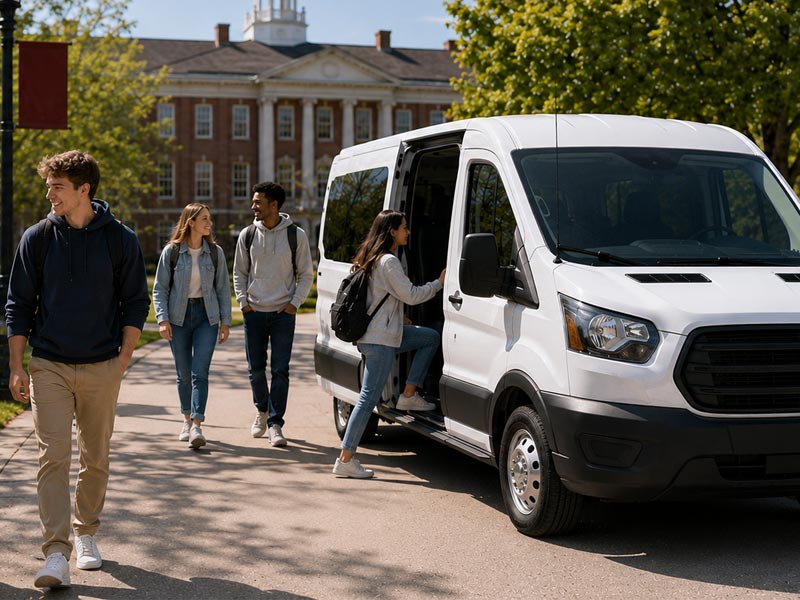
Passenger vans remain a popular choice for athletic teams, student organizations, and group travel. SUVs and mini vans provide additional flexibility for smaller groups and administrative functions. Cargo vans and pickup trucks support facilities departments, maintenance teams, and campus logistics throughout the academic year.
Instead of building a permanent fleet to cover every scenario, institutions can scale transportation based on actual operational needs.
That approach helps improve utilization while ensuring departments have access to the right vehicles when demand increases.
Beyond the Vehicle: Building a Transportation Program
Transportation planning is about more than simply reserving vehicles.
Many colleges and universities are moving away from traditional daily rental models in favor of programs designed around the academic calendar. Rather than coordinating multiple rentals throughout the year or relying on counter pickups, institutions can benefit from a solution that aligns with their schedule from the start.
Programs with terms ranging from three to twelve months, including popular nine-month academic schedules, help simplify planning while reducing administrative burden. Vehicles can be delivered directly to campus, maintenance is included throughout the rental period, and schools receive newer, low-mileage vehicles without the responsibilities that come with ownership.
For additional peace of mind, options such as Limited Loss Damage Waiver, Full Damage Waiver, and Premium Roadside support can help minimize disruption if unexpected issues arise during the school year.
Start the Semester Ready
The colleges and universities with the smoothest fall transitions rarely wait until students arrive to think about transportation.
They begin planning while summer is still underway, aligning vehicle needs with the academic calendar and securing the flexibility to support changing demands throughout the year.
“Transportation should support the student experience, not become an operational hurdle,” said Fier. “Planning ahead gives institutions more confidence that the right vehicles will be available when classes begin, teams hit the road, and campus activity returns.”
As another academic year approaches, now is the time to evaluate transportation needs, coordinate across departments, and secure the vehicles that will help keep campus moving from the first day of classes through the final event of the semester.
Whether you need vans for a semester, a season, a specific program, or eventually longer term, our team can help you find a path that supports your schedule. Contact Merchants Fleet today.