

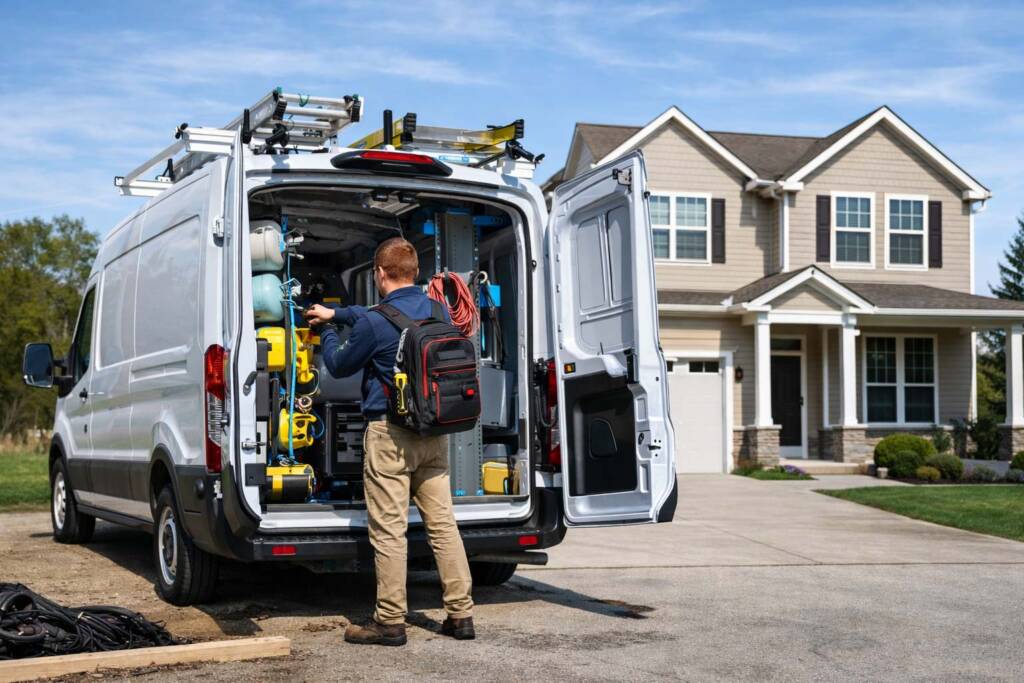
Fleet decisions shape the way HVAC companies grow. Whether you’re adding technicians, expanding into new markets, or integrating newly acquired brands, the vehicles that support your field teams have a direct impact on financial performance, technician productivity, and customer satisfaction. Yet one of the most debated questions among HVAC operators remains the same:
Is it better to lease HVAC service vehicles or buy them outright?
Both models can work under the right conditions, but they serve different strategic purposes. Buying vehicles provides long-term ownership and potential resale value. Leasing offers capital flexibility, predictable costs, and faster access to standardized, work-ready units. The direction an HVAC operator chooses often depends on cash flow, growth objectives, technician workload, and how heavily the business relies on consistency across its fleet.
This guide breaks down the financial and operational trade-offs between leasing and buying, so HVAC leaders can choose the strategy that supports long-term performance and business growth.
Why HVAC Companies Are Rethinking Fleet Financing
HVAC organizations operate within a unique set of pressures. Seasonality creates sharp peaks in demand, supply chain volatility affects acquisition timelines, and technician efficiency often serves as the primary driver of revenue. As companies expand or integrate through acquisitions, fleet financing becomes more than an accounting question. It becomes a strategic decision with direct ties to EBITDA, scalability, and market competitiveness.
For PE-backed HVAC companies, the stakes are even higher. Capital allocation, valuation metrics, and fleet lifecycle planning must be tightly aligned to financial goals across the broader portfolio. Self-managed HVAC operators face a different challenge: limited access to capital or restrictive bank financing, which can slow expansion or prevent timely vehicle replacements.
Against this backdrop, HVAC leaders are reassessing how they fund their fleet. Leasing and buying each offer advantages, but the best choice depends on an operator’s growth stage, operational goals, and need for capital flexibility.
The True Cost of Buying HVAC Vehicles Outright
At first glance, purchasing HVAC vans and trucks seems straightforward. Ownership provides full control, unlimited mileage, and the ability to run vehicles for as long as desired. Yet the total cost of buying extends far beyond the sticker price. It affects capital availability, maintenance unpredictability, and the level of standardization across the fleet.
Below are the primary challenges HVAC operators experience when relying on an ownership model.
1. Upfront Capital Drain
Buying vehicles requires a large initial investment, especially once you account for the required HVAC-specific upfits such as shelving, storage, racking, ladder systems, and safety equipment. A single vehicle can represent a significant cost. Multiply that by 10, 20, or 50 units, and the financial impact becomes substantial.
Tying up capital in depreciating assets limits funds available for other high-priority initiatives, including:
- Strategic acquisitions
- Technician hiring ramp-ups
- Adding new branch locations
- Investing in tools and equipment
- Strengthening operational infrastructure
This creates tension for both personas identified in the HVAC space. PE-owned operators must optimize EBITDA and preserve capital for rollups, while self-managed HVAC companies often struggle with traditional loan requirements or interest rates that make purchasing even more difficult.
2. Inconsistent Replacement Cycles
When HVAC companies own their vehicles, replacement decisions tend to be reactive rather than planned. It’s common to keep units in service long past their ideal lifecycle, especially when budgets are tight.
As owned vehicles age, operators begin to feel the impact:
- Downtime increases due to mechanical failures
- Repairs become more frequent and unpredictable
- Maintenance expenses rise sharply
- Technician morale drops when vehicles are unreliable
- Customer experience suffers due to delays or missed appointments
Without structured lifecycle planning, HVAC operators face both operational disruption and financial inefficiency.
3. Harder to Standardize Across Brands and Locations
HVAC fleets often grow organically over time. When companies own their vehicles, they may purchase different makes, models, sizes, or upfit configurations depending on availability at the time. This creates a lack of uniformity across technicians and branches.
The consequences of a non-standardized fleet include:
- Fragmented upfit specifications
- Different parts, tools, and storage systems
- Uneven technician workflows
- Variability in safety and ergonomics
- Inconsistent fleet performance across regions
For PE-backed HVAC platforms, the lack of standardization complicates integration across acquired brands. Training becomes slower, maintenance becomes less predictable, and technicians struggle to adapt when vehicles differ from branch to branch.
While ownership provides a sense of control, it does not always deliver efficiency or predictability across the organization.
Why HVAC Leasing Is Becoming the Preferred Strategy
Leasing has seen significant adoption across the HVAC industry, especially among organizations seeking to scale efficiently or unlock capital for growth. Instead of tying up cash in owned assets, leasing allows operators to deploy vehicles quickly, maintain predictable monthly costs, and align fleet decisions with business performance.
Here’s why more HVAC companies are shifting toward leasing.
1. Preserve Capital and Improve Cash Flow
One of the strongest arguments for fleet leasing is the financial flexibility it creates. Instead of spending large sums of money upfront, leasing spreads vehicle costs over manageable monthly payments. This protects cash flow and gives operators the ability to reinvest in areas that drive business value.
Examples of where freed-up capital can be directed include:
- Technician hiring and onboarding
- New branch openings
- Marketing to capture seasonal demand
- M&A activity for multi-brand expansion
- Tools, safety equipment, and training programs
These investments often generate higher returns than tying up capital in vehicles, which steadily depreciate over time.
2. Faster Access to Vehicles
Supply chain constraints, limited OEM availability, and long factory lead times have made timely acquisition difficult for HVAC companies that rely on purchasing. Leasing partners, by contrast, often provide a broader set of sourcing options.
These may include:
- Ready-to-deploy HVAC vehicles
- Near-new and pre-owned units for urgent needs
- National dealer networks with priority access
- Upfit packages completed faster through coordinated vendor partnerships
Faster access to vehicles supports technician deployment and service continuity during periods of peak demand. When acquisition timelines align with hiring and seasonal workload, HVAC operators are better positioned to maintain service levels and customer satisfaction.
3. Easy Standardization Across Technicians and Branches
With leasing, HVAC companies can implement consistent vehicle specifications across their entire fleet. Standardization improves operational efficiency and creates a predictable environment for technicians.
Benefits include:
- Faster training and onboarding
- Improved job completion rates
- Fewer service interruptions caused by mismatched equipment
- Uniform safety and ergonomic standards
- Simplified inventory management and restocking
This level of consistency is especially beneficial for PE-backed platforms managing multiple brands under one umbrella. Standardization aligns field operations, creates a unified technician experience, and strengthens quality control.
4. Better EBITDA Visibility for PE-Owned HVAC Companies
For organizations operating under private equity, fleet decisions must support broader valuation strategies. Leasing — particularly hybrid capital leases — helps achieve this by shifting costs from CapEx to OpEx. This approach preserves capital, improves financial metrics, and supports long-term value creation.
PE stakeholders also benefit from:
- Predictable monthly fleet costs
- Program-level visibility across all brands
- Lifecycle planning aligned to growth strategies
- Centralized controls for budgeting and forecasting
These advantages make leasing a compelling option for platforms managing hundreds of vehicles across multiple markets.
When Leasing Makes the Most Sense
Leasing is not a one-size-fits-all model, but it is often the best fit for HVAC organizations in growth or transformation mode. The model shines in scenarios where operators need speed, flexibility, and consistency.
Leasing is especially effective when an HVAC business is:
- Adding new technicians and vehicles at a rapid pace
- Expanding into new markets or branch locations
- Integrating acquired brands
- Standardizing upfits across regions
- Managing seasonal spikes in demand
- Operating within a PE-backed structure
- Seeking predictable expenses and clear budgeting
In each case, leasing helps operators reduce friction, preserve capital, and maintain the agility needed to compete and grow.
When Buying May Still Be a Fit
Although leasing offers many benefits, buying can still be a reasonable option in certain situations. Some HVAC operators prefer ownership for cultural reasons or because their fleet usage model is unusual for the industry.
Buying may be appropriate if the business:
- Maintains exceptionally low annual mileage
- Prefers long-term ownership over lifecycle rotation
- Invests heavily in refurbishing existing vehicles
- Keeps vehicles in service for a decade or more
However, these conditions are rare among HVAC operators, who typically experience heavy mileage, seasonal intensity, and significant daily wear on their vehicles. Most organizations benefit from a replacement strategy tied to economic useful life and total cost of ownership rather than extended ownership.
HVAC Fleet Financing Recommendation
Based on industry trends, capital constraints, lifecycle considerations, and the need for fleet consistency, most modern HVAC organizations benefit more from flexible leasing structures than outright purchase. Leasing supports both financial and operational goals by freeing up capital, reducing operational friction, and enabling faster access to standardized vehicles.
For PE-owned HVAC platforms, leasing aligns fleet operations with EBITDA and valuation strategies. For self-managed operators, it offers practical access to financing options that support growth without straining cash flow.
In both cases, leasing allows HVAC leaders to run a more predictable, scalable, and financially efficient fleet.
Calculate your fleet savings to see which fleet strategy best supports your business goals.