

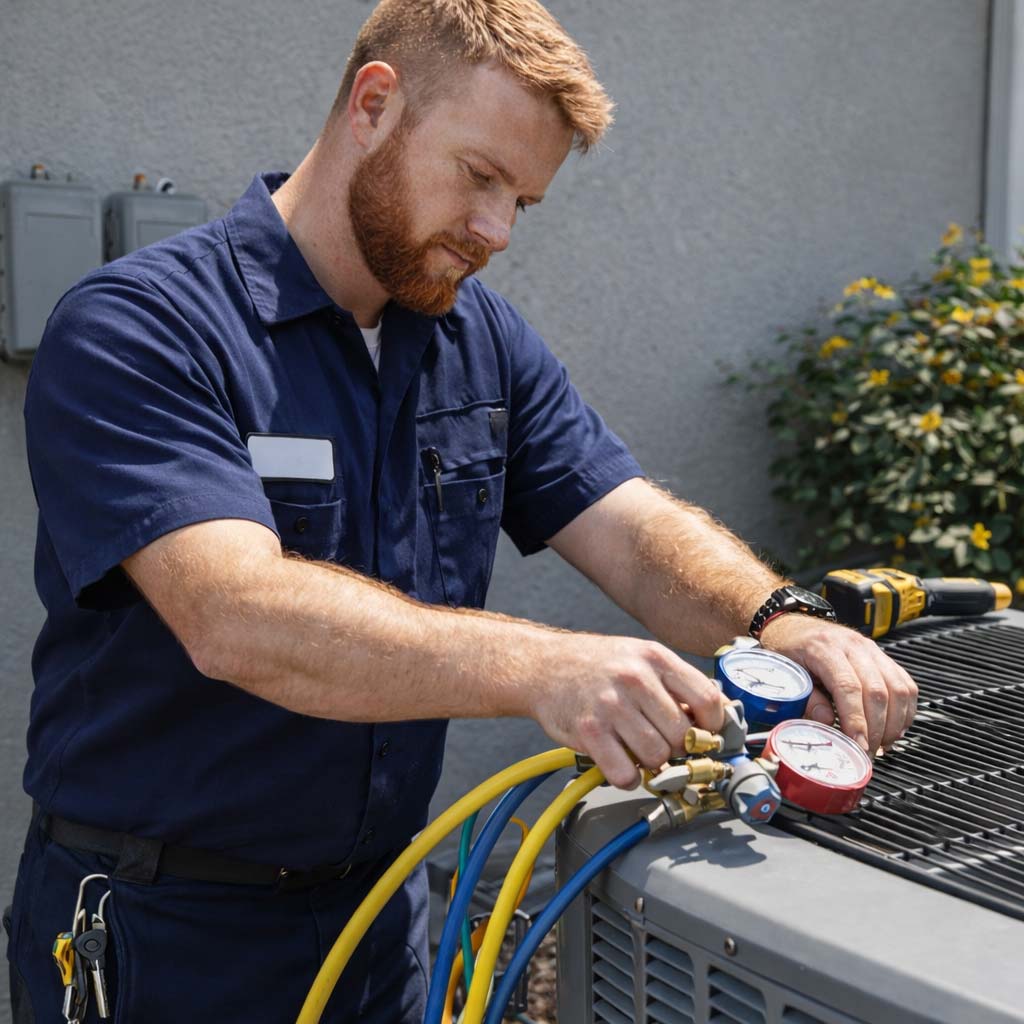
For HVAC businesses, technicians generate revenue. Every service call completed, emergency handled, or maintenance visit scheduled depends on having a technician equipped and on the road. When a vehicle is unavailable, productivity stops immediately.
Technician downtime is rarely isolated to a single problem. It often stems from vehicle breakdowns, slow procurement cycles, poor upfit design, or lack of visibility into fleet performance. While these issues are common across the HVAC industry, they are also highly preventable.
The most profitable HVAC companies treat downtime as a controllable expense. By improving fleet maintenance, standardizing vehicles, and using real-time data to make smarter decisions, these organizations keep technicians productive and customers satisfied.
This article breaks down why technician downtime erodes profitability, the most common causes behind it, and the proven strategies HVAC leaders use to reduce downtime and improve operational performance.
Why Technician Downtime Kills Profitability
Technician downtime has a direct and immediate impact on revenue. In HVAC operations, there is little margin for idle labor, especially during peak heating and cooling seasons.
When a technician is unable to work due to vehicle-related issues, the consequences multiply quickly:
- Missed or delayed appointments
- Frustrated customers who may turn to competitors
- Technicians being paid without generating revenue
- Scheduling disruptions across the entire branch
- Lost opportunity during high-demand periods
Downtime also affects morale. Technicians want reliable vehicles that allow them to do their jobs efficiently. Repeated breakdowns or poorly upfit vehicles create frustration and reduce job satisfaction.
5 Major Causes of HVAC Technician Downtime
Understanding the root causes of downtime is the first step toward eliminating it. While downtime can feel inevitable in a home service business, most interruptions follow predictable patterns.
Below are the most common reasons HVAC technicians end up off the road.
1. Vehicle Breakdowns
Breakdowns remain the most obvious cause of technician downtime. HVAC vehicles operate under heavy conditions, carrying equipment, tools, and parts while covering significant mileage each year. Without proactive fleet maintenance, small mechanical issues often escalate into major failures.
Reactive maintenance leads to:
- Unexpected service interruptions
- Emergency repairs at higher costs
- Technicians stranded mid-route
- Missed customer appointments
HVAC companies that rely solely on driver-reported issues often discover problems too late. Preventable breakdowns become unavoidable downtime.
2. Slow Procurement and Upfit Delays
Downtime does not only occur when vehicles fail. It also happens when new technicians cannot be deployed due to a lack of available vehicles.
Slow procurement cycles are especially damaging during peak season. Long OEM lead times, limited inventory, and fragmented upfit coordination can leave organizations waiting weeks or months for a vehicle.
Every delayed vehicle represents:
- Lost revenue from an idle technician
- Increased pressure on existing staff
- Delayed response times for customers
High-performing HVAC companies plan fleet availability well ahead of hiring cycles and use faster sourcing strategies to avoid these bottlenecks. They also build growth expectations into their Model Year Planning process.
3. Poorly Organized Upfits
Upfit design plays a major role in technician productivity. When tools, parts, and equipment are not organized consistently, technicians waste time searching for what they need.
Poor upfit layouts can:
- Increase job completion time by as much as 10–20%, according to fleet and field service productivity studies
- Lead to repeated trips back to the vehicle
- Create safety risks from loose or improperly stored equipment
- Cause unnecessary wear on tools and vehicle interiors
Over time, inefficient upfits translate directly into fewer jobs completed per day. That lost time adds up quickly across a fleet of vehicles.
4. Lack of Telematics
Many HVAC companies still rely on manual tracking methods to manage their fleet. Without telematics and real-time data, it becomes difficult to identify emerging problems before they create downtime.
Manual tracking limits the ability to:
- Detect engine faults early
- Predict maintenance needs
- Identify underutilized vehicles
- Monitor idle time and fuel waste
Without centralized fleet data, decision-making becomes reactive. Problems are addressed only after downtime has already occurred.
5. Aged Vehicles Still in Service
Older HVAC vehicles often become productivity liabilities. As vehicles age, maintenance costs rise and reliability declines. Keeping aging units in service too long may seem cost-effective on paper, but the hidden costs of downtime often outweigh the savings.
Aged vehicles are more likely to:
- Experience frequent breakdowns
- Require longer repair times
- Fail during peak service periods
- Reduce technician confidence and efficiency
The most successful HVAC companies replace vehicles based on their expected useful life rather than historical maintenance spend, preventing downtime before it disrupts operations.
The Strategy High-Performing HVAC Companies Use
Reducing technician downtime requires a coordinated fleet strategy. High-performing HVAC organizations focus on prevention, speed, and visibility. Instead of reacting to problems, they build systems that minimize disruptions before they occur.
Below are the core strategies used by HVAC leaders to keep technicians productive.
1. Preventative and Predictive Fleet Maintenance
Strong fleet maintenance programs are the foundation of uptime. Preventative maintenance ensures vehicles are serviced on schedule, while predictive maintenance uses data to identify issues before they cause failures.
Using telematics, HVAC companies can track:
- Engine hours
- Diagnostic trouble codes
- Idle time and driving behavior
- Maintenance intervals
- Usage patterns across vehicles
This data allows fleet managers to schedule service proactively, reducing unexpected breakdowns and keeping vehicles on the road longer.
Predictive maintenance is especially valuable for high-mileage HVAC fleets, where early detection can prevent costly downtime during busy seasons.
2. Faster Access to Ready-to-Deploy HVAC Vans
Speed matters when deploying technicians. While factory orders are a critical part of long-term fleet planning, relying on them alone can limit flexibility during periods of rapid hiring or seasonal demand.
High-performing HVAC companies use diversified acquisition strategies that complement factory ordering with additional sourcing options, including:
- Ready-to-deploy HVAC vans for immediate needs
- Near-new or pre-owned units to support short-term demand
- National dealer networks to improve fulfillment speed
- Coordinated upfit programs that reduce overall turnaround time
By combining factory orders with more flexible acquisition channels, HVAC operators can better align vehicle availability with hiring plans, growth initiatives, and seasonal workload.
3. Standardized Upfits for All Technicians
Standardization is one of the most effective ways to improve technician efficiency. When every vehicle is set up the same way, technicians spend less time adjusting and more time completing jobs.
Standardized upfits deliver:
- Faster technician onboarding – train the tech to the spec
- Reduced “van setup time”
- Improved job completion consistency
- Easier inventory management
- Improved safety and ergonomics
For multi-branch or PE-backed HVAC organizations, standardization also supports scalability by ensuring consistency across all locations.
4. Real-Time Fleet Visibility
Real-time dashboards provide HVAC leaders with the insights needed to manage downtime proactively. Centralized fleet visibility allows operators to monitor performance across every vehicle and location.
Key metrics tracked include:
- Cost per mile
- Technician utilization
- Vehicles nearing service intervals
- Maintenance compliance
With this level of visibility, decision-makers can identify patterns, address issues early, and allocate resources more effectively.
5. Lifecycle Management
Lifecycle management ensures vehicles are replaced before they become downtime risks. Rather than waiting for failures, HVAC companies plan replacements based on the economic useful life of the vehicle. Key to this strategy is understanding a vehicles historical total cost of ownership at each mileage band in its potential lifecycle.
Effective lifecycle management:
- Reduces emergency repairs
- Improves budget predictability
- Keeps technicians in reliable vehicles
- Supports consistent fleet performance and keeps overall total cost of ownership as low as possible
This approach transforms fleet decisions from reactive fixes into planned investments that support long-term profitability.
Turning Downtime Reduction into a Competitive Advantage
When HVAC companies successfully reduce technician downtime, the benefits extend beyond operational efficiency. Improved uptime leads to:
- Higher revenue per technician
- Better customer satisfaction and retention
- Lower maintenance costs
- Improved technician morale
- Greater predictability in scheduling and budgeting
Downtime reduction also strengthens financial performance. For PE-backed organizations, fewer disruptions support EBITDA improvement and enterprise value growth. For businesses managing fleet in-house, consistent uptime creates a more stable and scalable business.
See How Top HVAC Companies Improve Fleet Reliability and Technician Readiness
Technician downtime is not inevitable. With the right fleet maintenance strategy, real-time fleet tracking, standardized vehicles, and lifecycle planning, HVAC companies can significantly reduce disruptions and improve profitability.
If you want to understand where downtime is impacting your fleet and how to address it, a fleet optimization review can uncover opportunities to improve uptime and efficiency.
Talk to an HVAC fleet specialist and see how other leading HVAC companies reduce technician downtime while increasing profitability.