
Private equity–backed HVAC companies grow by acquiring strong regional operators and integrating them into a larger organization. While this strategy accelerates revenue, it often introduces operational complexity — especially within the fleet.
Inherited fleets rarely follow a single standard. Instead, organizations are left managing a patchwork of vehicle types, upfit designs, replacement cycles, and vendors. Over time, this fragmentation increases costs, slows technician onboarding, and limits visibility across the organization.
Fleet standardization solves these challenges. By aligning vehicle specifications, upfits, procurement, and lifecycle planning under a unified strategy, companies can create consistency, improve efficiency, and unlock scalable growth.
This article explains why fleet standardization matters, how to implement it effectively, and why it has a measurable financial impact for PE-owned HVAC companies.
Why Standardization Matters
Growth through acquisition brings operational realities that are easy to underestimate. Each acquired HVAC business arrives with its own fleet decisions, shaped by local vendors, historical preferences, and availability at the time of purchase.
Over time, this leads to fleet chaos:
- Different vehicle specifications
- Multiple upfit vendors with varying quality and timelines
- Inconsistent replacement cycles
- Disconnected maintenance and cost reporting
- No unified view of total fleet spend
Without standardization, fleet operations become harder to manage as the company scales. Costs rise quietly; technicians face inconsistent vehicle setups, and leadership loses the ability to forecast, compare, and optimize performance across brands.
Standardization creates structure. It allows businesses to move from reactive fleet management to a controlled, repeatable system that supports growth rather than slowing it down.
The Operational Benefits of Fleet Standardization
Standardization is not just about uniformity. It is about building efficiency into every layer of the fleet program.
Lower Upfit Costs
Consolidating to a small number of approved vehicle and upfit configurations reduces complexity and cost. Vendors can work more efficiently, pricing becomes more predictable, and rework caused by inconsistent specs declines.
Over time, standardized upfits lower per-vehicle costs while improving quality and durability.
Faster Technician Onboarding
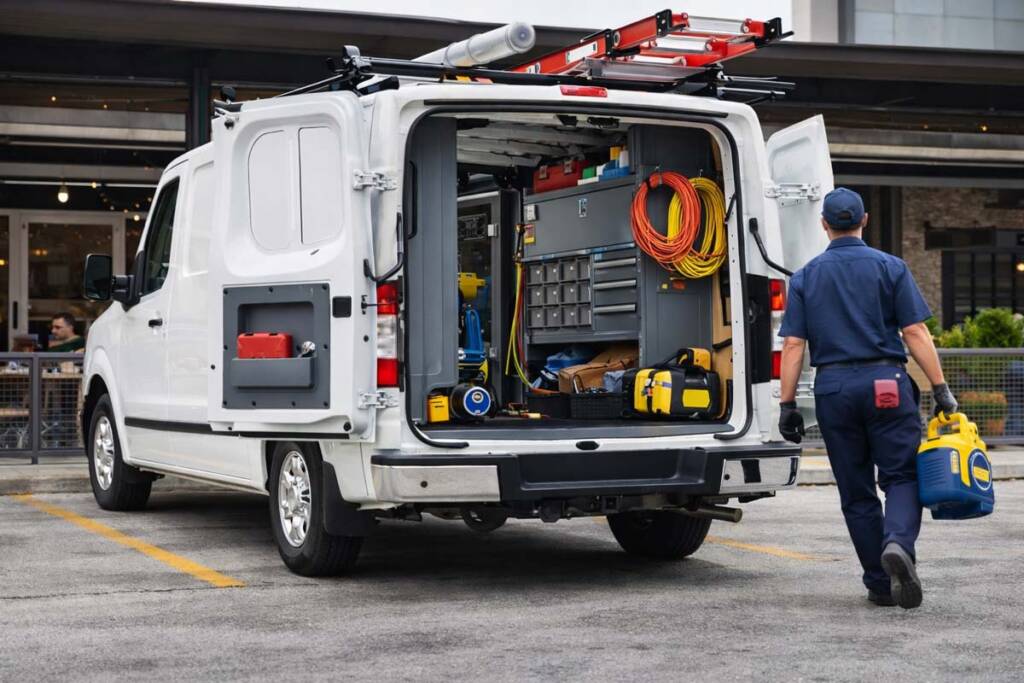
When every technician receives the same vehicle layout, onboarding becomes faster and more repeatable. Technicians do not need time to relearn where tools, parts, or equipment are stored.
This consistency shortens ramp-up time and allows newly hired technicians to reach full productivity sooner.
Predictable Maintenance and Fewer Surprises
Maintenance schedules, service intervals, and replacement timing become easier to plan.
Instead of reacting to unexpected failures across a mixed fleet, HVAC fleets can forecast maintenance needs and reduce unexpected service disruptions across all brands.
Reduced Technician Downtime
Inconsistent fleets often lead to downtime caused by unfamiliar layouts, delayed repairs, or unavailable parts. Standardization minimizes these issues by creating uniform service requirements and vehicle performance expectations.
Reliable, consistent vehicles keep technicians on the road and focused on revenue-generating work.
Consistent Brand Presence
For platforms operating under multiple brand names, vehicles still represent the company in the field. Standardized fleets ensure a professional, consistent appearance that reflects quality and reliability, regardless of location.
This consistency strengthens customer trust and reinforces brand standards across regions.
Simplified Inventory Management
With fewer vehicle and upfit variations, parts, tools, and replacement components can be managed more efficiently. Inventory planning becomes simpler, waste is reduced, and technicians spend less time sourcing equipment.
Read More: Turnpoint is ‘ Bringing It All Together’
How to Standardize an HVAC Fleet
Successful fleet standardization does not happen overnight. It requires a structured approach that balances operational realities with long-term strategy.
1. Audit Existing Fleet Specifications
The first step is understanding what you have. A full audit should capture:
- Vehicle makes, models, and years
- Current upfit designs and vendors
- Maintenance costs and service patterns
- Replacement timing across brands
- Mileage patterns and vehicle assignment history
This baseline highlights inefficiencies and identifies opportunities for consolidation.
2. Build a “Gold Standard” Configuration
Once the audit is complete, HVAC leaders can define a core set of approved configurations. This “gold standard” typically includes:
- One or two primary vehicle models
- A standardized HVAC upfit design
- Approved safety and storage components
- Clear weight and payload requirements
The goal is not to eliminate flexibility entirely, but to limit variation to what is operationally necessary.
3. Consolidate Upfit Vendors
Working with too many upfit providers leads to inconsistent quality and timelines. Standardization allows HVAC platforms to consolidate around a national or regional network of vetted vendors.
This improves turnaround time, quality control, and accountability while reducing administrative overhead.
4. Centralize Fleet Procurement
Decentralized vehicle ordering undermines standardization. Centralized procurement ensures all new vehicles follow approved specs and pricing structures.
This approach also strengthens purchasing leverage and improves forecasting accuracy across the platform.
5. Implement Shared Dashboards and Reporting
Standardization requires visibility. Centralized dashboards allow leadership to monitor:
- Total fleet spend
- Maintenance coordination and service history
- Replacement timing
- Cost per vehicle and per mile
Shared reporting creates accountability and supports data-driven decisions across all brands.
6. Introduce Lifecycle Replacement Plans
A standardized fleet should also follow standardized replacement logic. Lifecycle planning ensures vehicles are retired before reliability declines and downtime increases.
This approach stabilizes budgets, improves uptime, and prevents aging vehicles from becoming operational liabilities.
The Financial Impact for PE-Owned HVAC Companies
For private equity–backed HVAC platforms, fleet standardization directly supports financial objectives.
Improved EBITDA
Lower operating costs, reduced operational disruption, and predictable maintenance all contribute to stronger EBITDA performance. Standardization removes inefficiencies that quietly erode margins across large fleets.
Unified Cost Structure
A standardized fleet creates consistent cost models across brands. This simplifies budgeting, forecasting, and performance comparisons at the portfolio level.
Better Forecasting and Capital Planning
With predictable replacement cycles and maintenance trends, leadership can plan capital allocation more effectively. Fleet decisions become proactive rather than reactive.
Stronger Valuation Multiple
Buyers and investors value operational consistency. A standardized fleet signals control, scalability, and discipline — all factors that support stronger valuation multiples during recapitalization or exit.
Fleet Standardization as a Growth Enabler
Fleet standardization is not about control for control’s sake. It is about creating an operational foundation that allows HVAC platforms to grow without friction.
As acquisitions continue and fleets expand, standardization ensures:
- New brands integrate faster
- Technicians remain productive
- Costs stay predictable
- Leadership retains visibility and control
For multi-brand HVAC operators, standardization turns fleet operations from a source of complexity into a competitive advantage.
Ready to Standardize Your Multi-Brand HVAC Fleet?
If your HVAC platform is managing multiple brands, vehicle types, and upfit configurations, fleet standardization can unlock measurable operational and financial benefits.
A structured standardization approach helps reduce downtime, control costs, and support scalable growth across the entire organization.
Talk with an HVAC fleet specialist to see how a unified fleet strategy can support your next phase of growth.